The Gran Puma Mushroom, which has not been recorded for more than 35 years, may have been rediscovered by a group of mycologists from the Fundación Fungi.
July 28, 2023
FFungi Staff
FFungi Volunteer
A team of mycologists from the Fundación Fungi travelled to the Nahuelbuta mountain range in Chile in May 2023 in search of the Hongo Gran Puma.(Austroomphaliaster nahuelbutensis), a species that has only been documented by science once, in 1988. The scientists followed in the footsteps of the mycologist Norberto Garrido, who made two trips to the mountains in the early 1980s and collected more than 200 species of fungi. The Hongo Gran Puma was one of them, and mycologists wonder whether it still exists in those mountains and why it apparently “disappeared”.
“There are no photographs of the species,” says Daniela Torres, mycologist and leader of the expedition team. “We have no evidence that it has been found again; no analysis of this mycorrhizal fungus and how it interacts with the ecosystem around it.”
The species is endemic to the temperate forest of Nahuelbuta, with which it shares its name. Not much is known about Hongo Gran Puma, apart from the fact that it is currently considered a monotypic genus, which means it could be the only one of its kind.
An achievement in the search for lost species
The Gran Puma Fungus is the first and only species in the fungi kingdom to be included among the “25 most wanted” of theRe:wild’s Search for Lost Species.The Fundación Fungi expedition to Nahuelbuta National Park and the small surrounding localities was the first attempt to find a “lost” fungus in Chile, and the adventure began before the expedition team set foot in the park.
“This time of year, and this particular date specifically, were crucial for the expedition,” explains Torres.
It is possible that the Hongo Gran Puma only produces mushrooms on the same dates each year, which made the timing of the expedition more crucial than other environmental factors. The expedition team, which also included the mycologist Claudia Bustamante and the forest engineer Gabriel Orrego, based their hypothesis on experiences with other fungi in Chile. They believed that the Hongo Gran Puma would be found in exactly the same places where Norberto Garrido had found it in 1982.
Following in Garrido’s footsteps
Identifying those exact places was not an easy task. There is only one account of Garrido’s exploration in the Nahuelbuta mountains. Acting like detectives, the team turned to the most significant clues they had: Garrido’s thesis. It is written in German, so to follow in his footsteps, they first translated all the mycologist’s notes and descriptions.
They then produced a complete profile of the fungus, including its macro- and micro-level details, such as size, colour, cap shape, gills, stipe and spores. Thanks to Garrido’s description, the team also discovered that the fungus is associated with trees such as oak (*Nothofagus obliqua*) and Raulí (Nothofagus dombeyi).
Based on these data and on a drawing made by Garrido 35 years ago, the team also created a list of all those other species that could be mistaken for the Hongo Gran Puma.

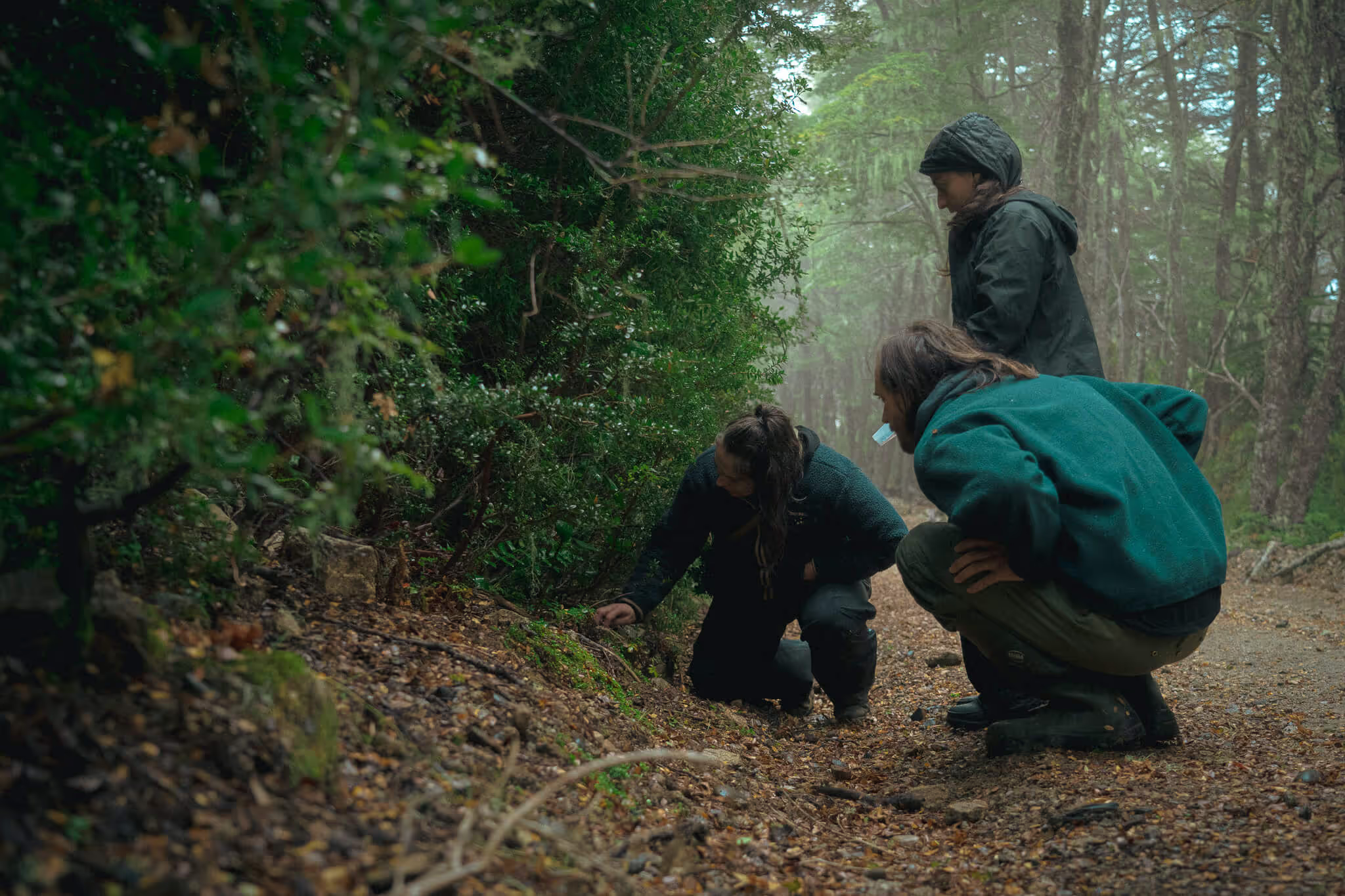
After gathering as much information as they could, the team decided that autumn in Chile between 15 and 21 May would be the best time to begin the search. They visited Vegas Blancas, a rural area with little native forest remaining owing to pressure from the timber industry in the region, and Piedra del Águila, an area within Nahuelbuta National Park. Garrido visited both places on his expedition, but the team also explored some areas outside the park that still have a forest similar to what was there when Garrido visited.
“The habitat between Vegas Blancas and the park is now largely an urban area,” says Torres. “But we found some other species there that Garrido described on the list; they were species typical of more disturbed areas, fields and roadside verges, such as those of the genera”*Agaricus*andLepiotas".
The temperate rainforest of Nahuelbuta National Park is ahotspotof wildlife. It is full of araucarias, an ancient species of conifer, and has more mammal species compared with forests in the Cordillera de Andes at the same latitude. The park’s plant composition remains largely the same as when Garrido visited it, full of southern oaks and shrubs.

First day, first discovery
When the expedition team began to look for the Gran Puma Mushroom together with theNahuelbuta Foundation, an NGO focused on the advocacy, protection, education, and environmental restoration of the Nahuelbuta mountain range, feared that the unusually dry conditions might thwart their plans.
“I was very nervous that first morning, because I felt the air was too dry,” says Gabriel Orrego. “You scraped back the leaf litter and the soil underneath was dry. We spent the whole morning in the forest and couldn’t find anything.”
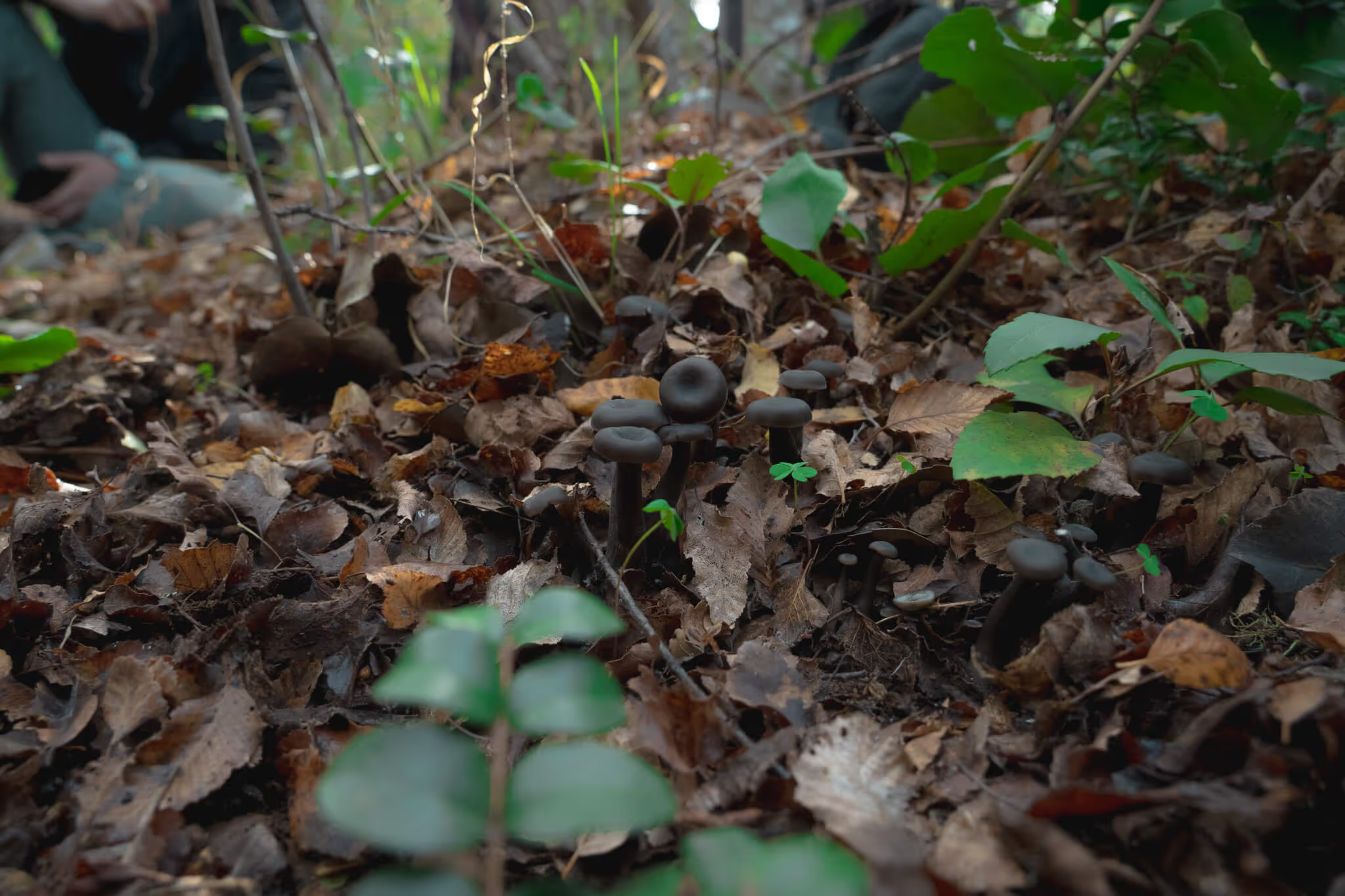
Suddenly, in the afternoon, a small fungus caught the team’s attention. It was the same colour as the Big Puma Fungus, greyish. It was in the right place and it was the right time of year. The team compared it against the strict checklist they had developed, which potential Big Puma Fungus candidates had to meet. Macroscopically, it seemed to be a match, and the team collected it to take it to the laboratory. Although there was still some uncertainty about the size, it was a candidate.

The team conducted an initial microscopic examination in a temporary laboratory set up in a cabin in the national park, but they determined that further, more detailed analysis of the samples would be needed to confirm which species it was.
“That first fungus had a lot of what we were looking for in terms of its colour palette, but it didn’t fit as well in terms of microscopic characteristics,” says Torres. “We didn’t find similar specimens in other sections of the national park.”
But as the days went by, it became clear just how special that ambiguous fungus was.
“We saw other species,” says Orrego. “But the fact that we saw all those other species in the beautiful forests—ancient forests—yet we couldn’t find another specimen that could be a good candidate for the Great Puma Fungus, with the same characteristics, the same morphotype that we found on the first day, made that first find even more unique.”
A dream team: Fundación Fungi and Nahuelbuta locals
“Magical.” That is how a group of local residents described a day they spent with the team of mycologists in the Nahuelbuta Mountains.
After spending almost a week exploring Nahuelbuta National Park and its surroundings, the team felt optimistic that they had potentially discovered the Great Puma Fungus, but they suspected they would need to organise another expedition to find a larger specimen and collect fungi at various stages of development to be sure they had found the correct species.
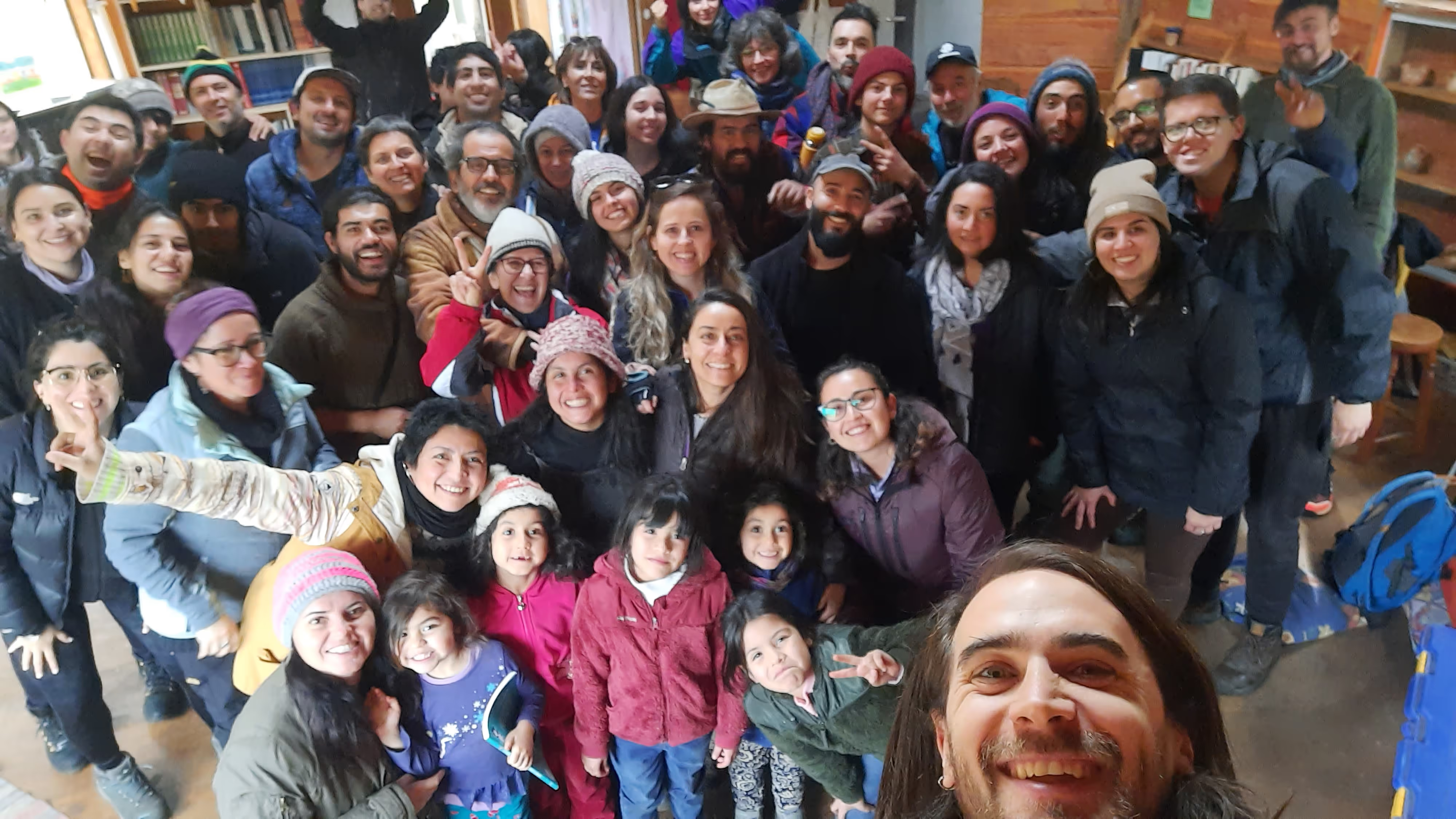
Throughout all the expeditions carried out by the Fundación Fungi, the team is committed to educating and training local communities in the areas they explore. With their fieldwork completed, they organised an educational walk with around 25 members of the local community to learn about fungi in the forest.
The team taught children and adults, from the age of five up to nearly 70, about the fungi in the region; how to identify edible fungi; how to collect them sustainably; and the different methods for collecting fungi for scientific analysis. Mycologists estimate that only around eight per cent of the 2.2 to 3.8 million fungal species on the planet have been described, so it is quite possible that someone who goes for a walk in a biodiverse area such as the Montañas Nahuelbuta could discover a new species.
While Orrego was explaining how to see and identify the macroscopic characteristics of fungi, he was interrupted by two people who were observing another fungus on the ground. They were only a few metres away from the team.
“We were left speechless,” says Orrego.
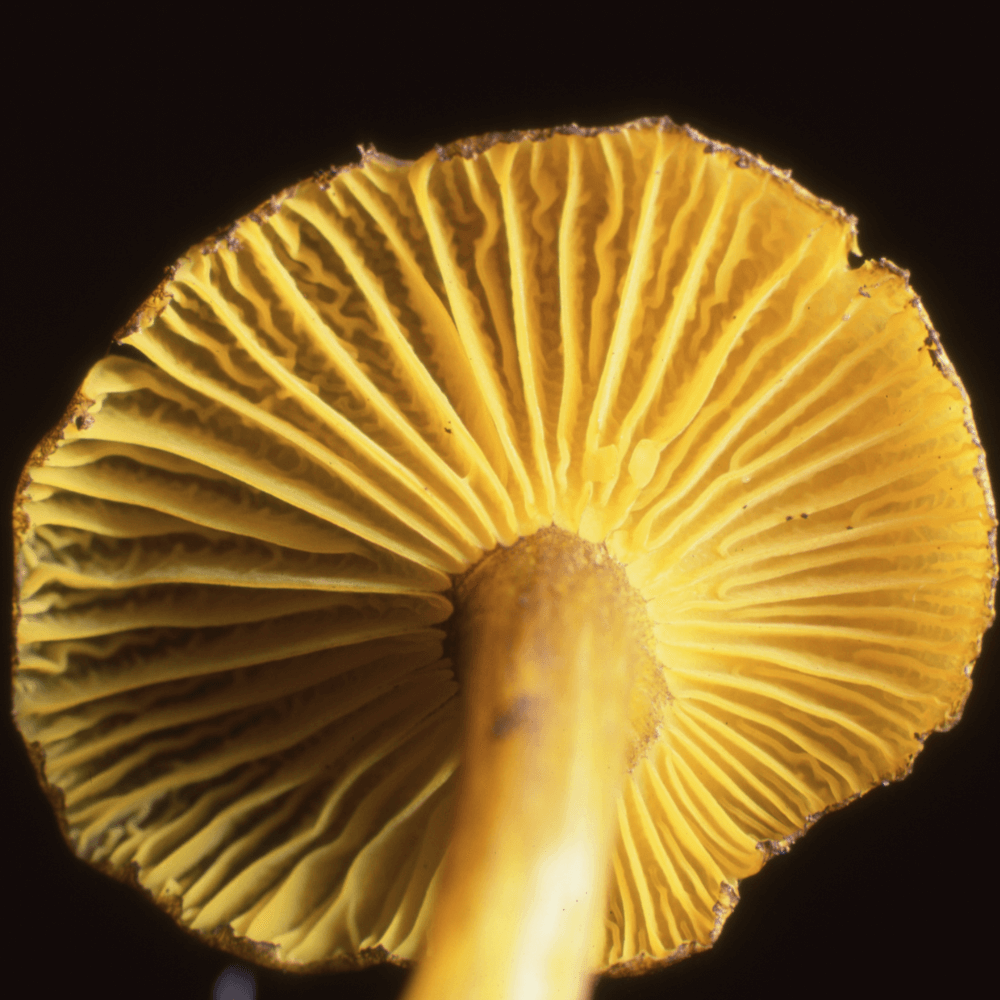
The two men were pointing at a group of about four mushrooms. They were grey with reddish tones, and the stipes were thicker at the base. The pileus (cap) of each mushroom had a small depression in the centre, with white lamellae underneath.
It was exactly what they had been looking for all week. At first, the team froze, but then “we screamed”, says Bustamante, recalling the moment they saw the fungi. Amid the celebrations, the team hugged and then enthusiastically began to collect the fungi. The locals formed a circle around them as they worked, taking care not to step on any of the specimens. The team took photos and recorded the fungi’s macroscopic characteristics while the local community looked on. Back in the laboratory, they examined the fungi’s spores in an initial microscopic analysis.
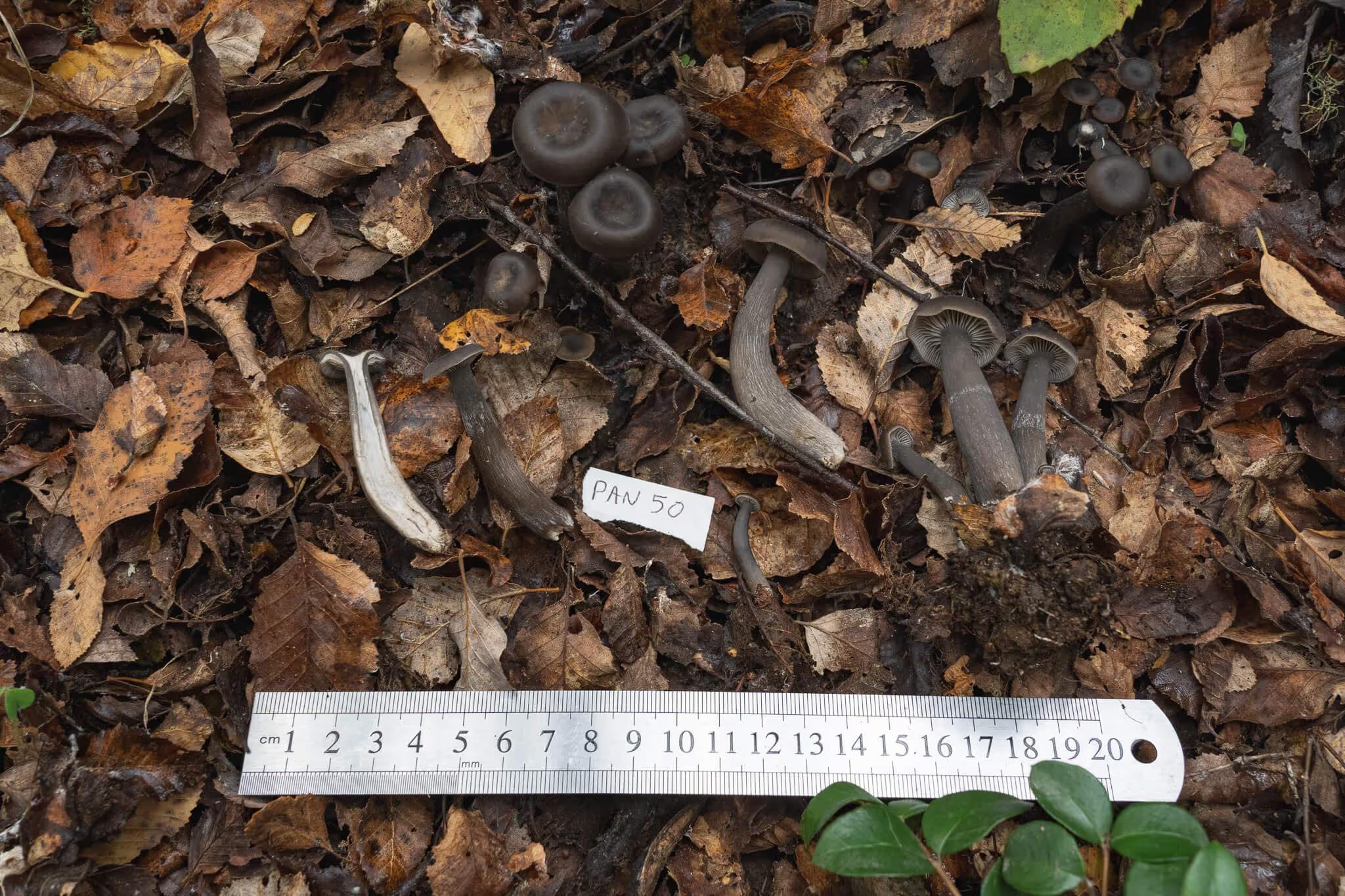
“The fungi had all the characteristics described in the strict checklist: they physically matched Garrido’s description and had larger, more developed sporomes,” says mycologist Claudia Bustamante, a member of the expedition team. “However, it cannot be definitively confirmed whether or not it is the Gran Puma Mushroom until all the microscopic structures have been measured and compared.”
After completing a detailed microscopic analysis of the fungi, the researchers will also extract DNA from them. It will be compared with the DNA of the specimen that Garrido described 35 years ago. If the results match, it will conclusively demonstrate that the expedition team has rediscovered the lost Great Puma Fungus. However, that process could take months and will require delicate and sophisticated handling of Garrido’s specimen.
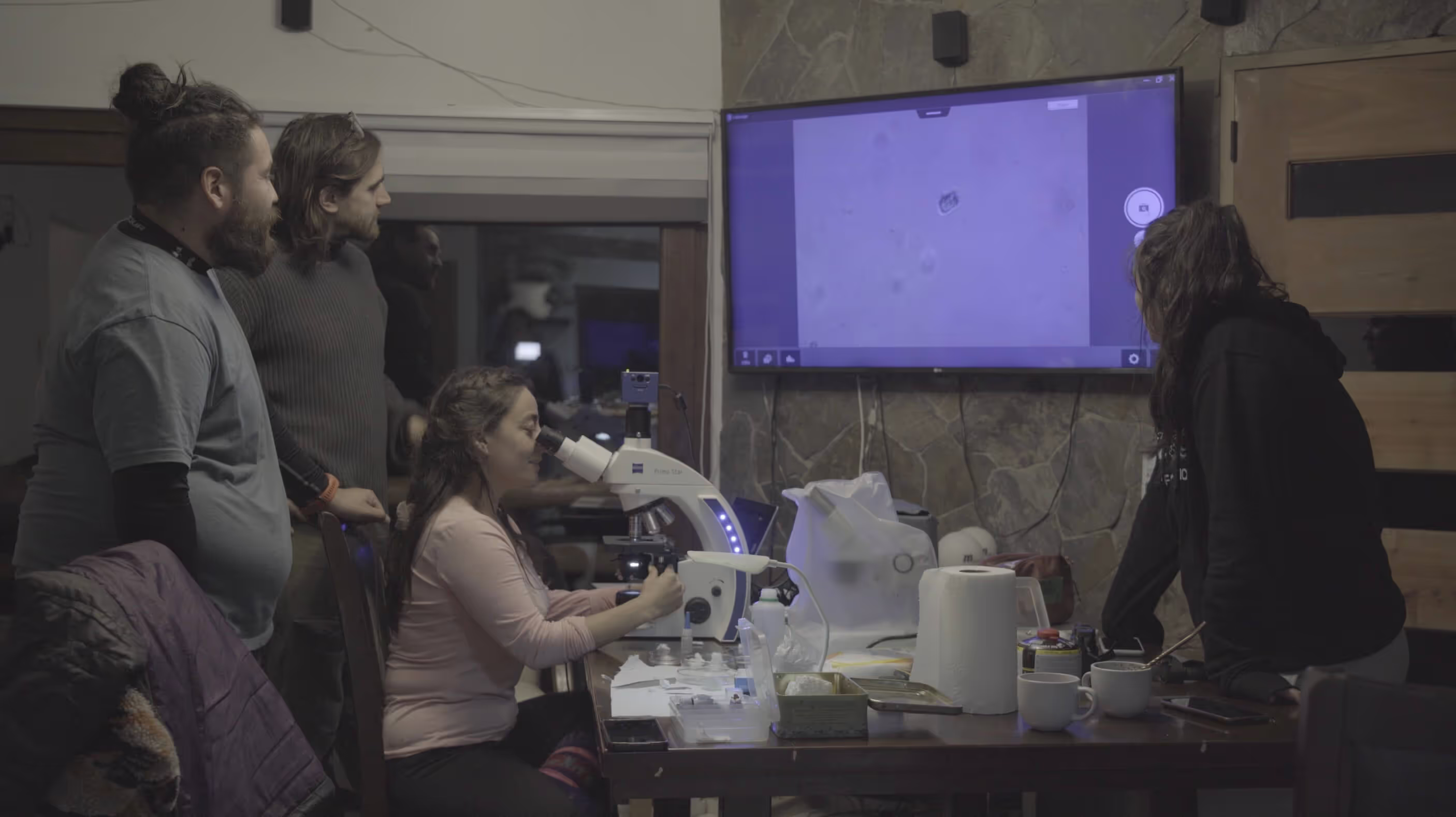
The possible candidate fungi from Gran Puma, along with other species collected by the team, will be added to the fungarium of the Fundación Fungi (FFCL), a collection of nearly 2,000 fungal species from around the world. In the laboratory, the team will continue making closer and more precise observations of the fungi, from their size, shape and spore colour to what they look like under a microscope.
“Expeditions like this are crucial to conservation efforts, as we are experiencing the sixth mass extinction and we will not be able to discover all species,” explains Daniela Torres. “Understanding the biodiversity of a specific area helps us to find out how its flora, fauna and funga behave, and how they may or may not adapt to ongoing changes and underlying threats.”


.avif)